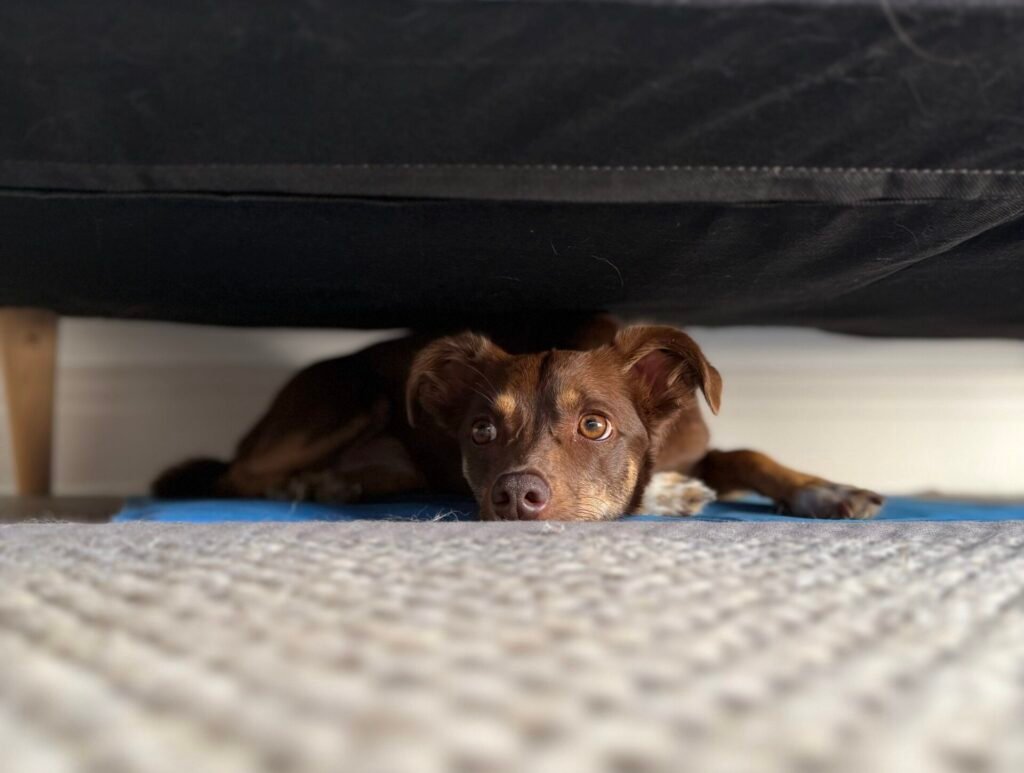
One of the most common things I hear from clients is, “I thought they’d get used to it.” And in the early days of having my own rescue dog (before I was a trainer), I was right there with them. I was sure that with regular, short drives in the car, she would eventually get used to it and overcome her fear.
When I believed the myth myself…
To set the scene, it’s early 2021. I’d adopted my dog, Sadie, from rural Romania a few months earlier, and she was now living in busy East London in the depths of Covid lockdowns – a world that must have felt completely alien to her.
From the start, she drooled, shook and was sick on almost every car journey, even ones as short as 10 minutes. She was also in and out of the vets with Giardia and worms, something that’s very common in overseas rescue dogs, even when they’ve been tested before travelling.
So, as a new dog guardian, my assumptions were probably what you’d expect: she’d associated the car with the frightening journey over here and repeated vet visits, and if I took her to nice places instead, she would start to feel better.
When exposure makes things worse…
What was actually happening was that with every car journey, and with every “training session” where I simply sat in the car with her, I was unknowingly “flooding” her – exposing her to her fears at a level that was far too much, and increasing her stress response rather than reducing it.
Luckily, a trainer said to me at the time, “sometimes, even short drives are WAY too much for the dog. Sometimes, even sitting in the car is WAY too much for the dog.” And I remember thinking, oh god, I’ve really messed up here. My sense of what felt manageable for her was completely different from her own. This was the moment I realised that ‘getting used to it’ isn’t always how learning works.
Why “they’ll get used to it” doesn’t work for anxious dogs
Some very robust dogs might manage to eventually tolerate things through intense exposure (“flooding”), but for most anxious dogs, it backfires. Rather than feeling safer, repeated exposure often makes fear and anxiety worse, strengthening the very associations we’re trying to undo.
A common example: anxious dogs and “socialisation”
I see this often with anxious dogs around other dogs. Owners are told (or assume) that the best way to help is more socialisation, so the dog is repeatedly taken to busy parks, group walks or placed in situations where they are surrounded by other dogs. Rather than learning that other dogs are safe, the dog is pushed well beyond what they can cope with, rehearsing avoidance or reactive behaviours repeatedly. Over time, this can make the anxiety and behaviour more ingrained and can make training slower and harder to undo.
What to do…
In these cases, a ‘desensitisation’ approach – exposing the dog at a low level where they can stay calm and feel safe – under the guidance of a qualified trainer, is usually the most effective and welfare-friendly way forward.
That’s exactly what worked for Sadie: small, manageable steps, lots of positive reinforcement, and patience. Over time, she went from stressed and fearful to calm and confident in the car – we’ve even driven to France with her, something that would have seemed impossible in that first, difficult year.
So how do you know if exposure is helping or harming? Ask yourself:
- With each exposure, are they showing more relaxed, soft body language?
- Or are they showing more avoidance behaviour? This can look like turning away, walking away, freezing up, stiff body language.
If it’s the second STOP and limit exposure until you can work with a qualified trainer to create positive associations.