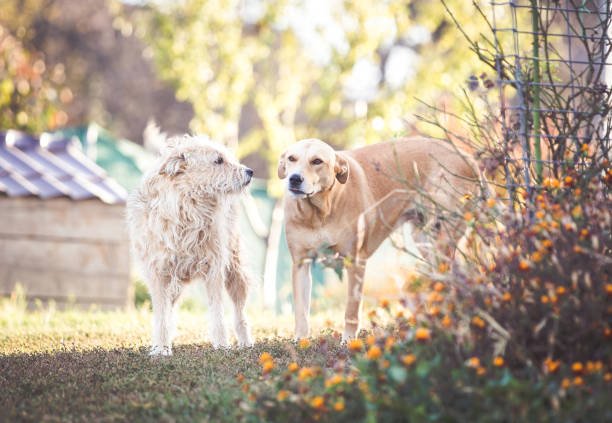
Romanian rescue dogs are often incredibly intelligent, loyal dogs who form deep bonds with their families.
However, many owners are surprised to find themselves living with a dog who barks at visitors, reacts strongly to unfamiliar sounds, struggles around strangers, or seems difficult to motivate with traditional training techniques.
While every dog is an individual, understanding both the genetics and life experiences that many Romanian rescue dogs bring with them can help owners better support them.
The Livestock Guardian Influence
Many free-roaming dogs in Romania have ancestry linked to livestock guardian breeds such as the Romanian Mioritic Shepherd, Carpathian Shepherd, and other regional guardian-type dogs.
These breeds were not developed to work closely alongside humans in the same way as gundogs, collies, or companion breeds. Instead, they were bred to independently assess their environment, identify potential threats, and make decisions without human guidance.
As a result, many Romanian rescue dogs display behaviours that are perfectly normal from a livestock guardian perspective:
- Barking when people approach the house
- Alerting to unfamiliar noises
- Watching and monitoring the environment
- Being suspicious of strangers
- Taking time to warm up to new people
- Being cautious around novel objects or changes in routine
- Preferring to observe before engaging
While these behaviours can be challenging in a suburban environment, they often make complete sense when viewed through the lens of a dog whose ancestors were responsible for protecting livestock from predators and intruders!
Why Some Romanian Rescues Are Fearful of Men
One pattern that new owner’s frequently report is that their dog appears particularly worried around men.
It’s important to remember that not every Romanian rescue has experienced abuse, and we can never know an individual dog’s full history. However, many dogs arriving from shelters or street environments have experienced frightening or traumatic interactions with people.
In some cases, dogs may have been actively mistreated. In others, they may simply have had very little positive exposure to people.
Men can often be particularly intimidating to fearful dogs because they typically:
- Have deeper voices
- Are physically larger
- Make more direct approaches
- May wear hats, workwear, or uniforms
For a dog already predisposed towards caution and environmental vigilance, these differences can be enough to trigger fear responses.
What looks like stubbornness, aloofness, growling, barking, or avoidance is often a dog communicating that they do not yet feel safe.
The Importance of Management
One of the biggest mistakes owners make is assuming that exposure to the “scary thing” automatically creates confidence.
In reality, repeated exposure that causes stress, often makes fears stronger and repeated behaviour (barking, growling etc) can become habit quickly! If your dog barks every time, they see a man outside and then that man naturally moves along, your dog may register that behaviour as successful and a new habit it learned.
Management is not avoiding training. Management is what allows learning to happen.
Good management might include:
- Closing curtains or getting opaque window film to prevent outside monitoring
- Going for a walk around the block with new visitors
- Providing a safe room or retreat space
- Avoiding crowded environments – it’s ok if your dog doesn’t like the pub!
- Being aware of their body language and keeping a suitable distance from triggers
- Preventing repeated rehearsals of unwanted behaviour
- Allowing the dog to opt out of interactions
Every time a dog is pushed beyond their coping ability, learning becomes much harder.
Understanding Trigger Stacking
Many Romanian rescue dogs appear to cope well until suddenly they don’t. This is often due to trigger stacking.
A dog may experience:
- A noisy delivery van in the morning
- Builders working nearby
- An unexpected visitor
- A stressful walk
- A neighbour’s dog barking
Each event adds a little stress to the system.
Eventually, the dog reaches a point where they can no longer cope effectively, leading to increased barking, reactivity, hypervigilance, or avoidance.
When owners understand trigger stacking, they can start viewing behaviour in the context of the dog’s whole day rather than focusing on a single incident.
Building Positive Associations
Confidence develops through repeated experiences where the dog feels safe. When new people arrive, the goal should not be to force interaction.
Instead here are a few ideas that might help:
- Walk around the block together to allow your dog to adjust to a new person being present
- Allow the dog to observe from a comfortable distance
- Let them choose whether to approach
- Avoid direct staring, reaching, or looming over them
- Pair the presence of people with good things
- Respect avoidance behaviour
Similarly, when introducing new sounds or environmental changes:
- Start at an intensity the dog can cope with
- Pair the experience with positives – treats, toys!
- Allow choice and control wherever possible
- Progress gradually over time
Most importantly, avoid punishing them! When a dog barks because they are worried, telling them off may suppress communication temporarily, but it does not change how they feel.
Instead, focus on understanding what the behaviour is telling you and helping the dog feel safer in that situation.
Progress Takes Time
Many Romanian rescue dogs arrive carrying a combination of guardian genetics, environmental sensitivities, and unknown life experiences.
They often require patience, understanding, and realistic expectations.
The goal is not to create a dog who loves every stranger, ignores every noise, or behaves like a sociable Labrador. The goal is to help them feel safe, confident, and able to navigate the world successfully.
When we stop viewing these dogs as difficult and start understanding the reasons behind their behaviour, we can build training plans that work with the dog in front of us rather than against them.
And that is often where the biggest breakthroughs begin!